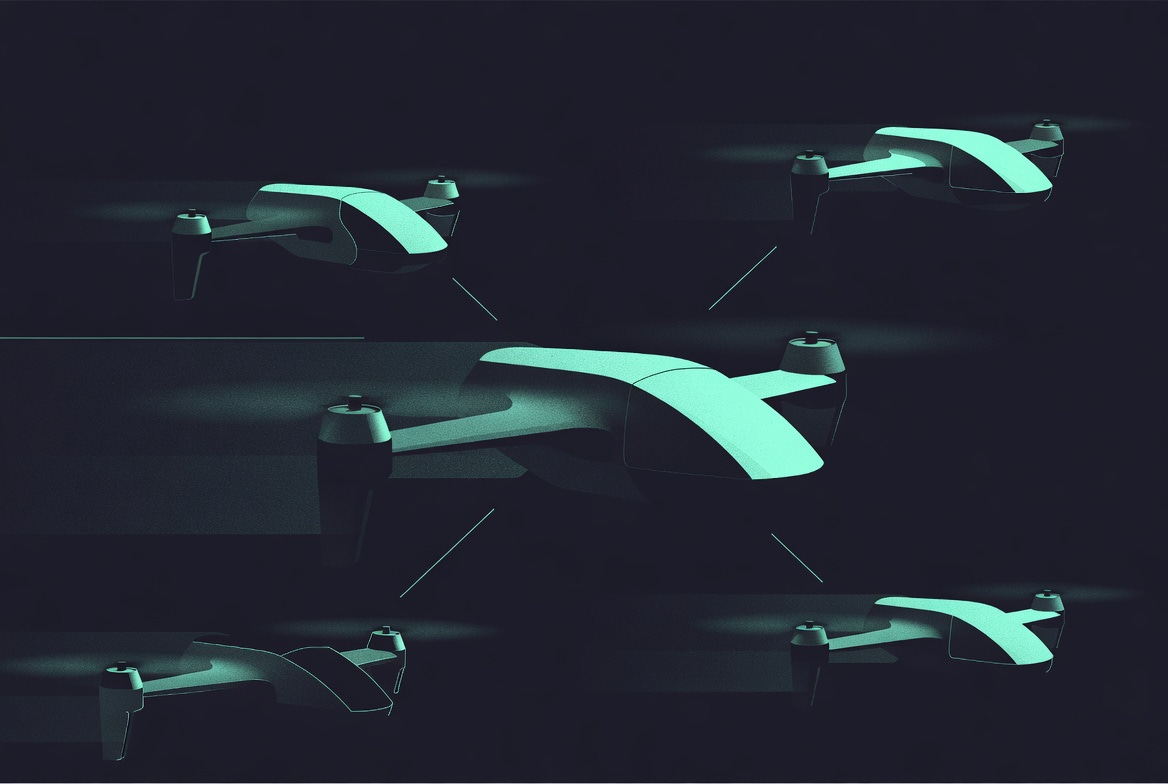
Swarm Systems and Autonomous Drones

The next major military advantage may not come from a single advanced fighter jet or a new class of warship. It may come from the ability to coordinate hundreds or even thousands of autonomous systems at once.
I’ve been thinking about this shift for a while now. For decades, the logic of Western defense was built around a relatively small number of high-performance, extremely expensive platforms. The idea was that technological superiority would allow us to offset an adversary’s numerical advantage. That assumption is being tested. What we’ve seen in recent conflicts is that mass still matters — and producing large numbers of capable systems quickly is extremely difficult under the old model.
What’s emerging instead is a different approach: large numbers of lower-cost, attritable platforms that can operate together with limited human oversight. This isn’t just about drones getting smarter. It’s about a change in how we think about mass, coordination, and the role of people in future operations.
Moving from One-to-One to One-to-Many
What interests me most is the shift in the human-machine relationship. Traditionally, one operator controlled one aircraft. The goal now is to move toward a model where a small number of humans can effectively direct and supervise a much larger group of autonomous systems. These systems need to be able to share information, allocate tasks among themselves, and adapt when conditions change or when communications are degraded.
This is harder than it sounds. Operating in contested environments — where GPS or data links can be jammed — requires a high degree of onboard autonomy. Companies like Shield AI have been working specifically on this problem with their Hivemind software. Others, including Anduril with its Lattice platform, are trying to build the broader software layer that connects sensors, drones, and decision-makers into something closer to a unified system.
I don’t think we’re at the point where fully autonomous swarms are making complex tactical decisions on their own. But we are moving in that direction, and the pace feels faster than many traditional defense programs.
Why This Shift Feels Different
What makes this development more than just another incremental improvement in unmanned systems is the combination of autonomy and economics. Because these platforms are designed to be attritable, the cost of losing them is much lower than losing a high-end manned aircraft or a sophisticated unmanned system. That changes the risk calculus for commanders and, over time, could influence how forces are structured.
At the same time, the same underlying technologies — autonomous navigation, multi-agent coordination, and resilient communications — have clear applications beyond defense. I’ve seen companies exploring how these capabilities could improve efficiency in logistics, infrastructure monitoring, and even public safety operations. The line between military and civilian use is becoming increasingly blurry, which raises its own set of questions around regulation and export controls.
Where We Stand Today
Programs like the Pentagon’s Replicator initiative were meant to accelerate this transition by fielding large numbers of autonomous systems more quickly. The results so far have been mixed — and that mixed record is exactly where the interesting questions start.
Because here’s the thing most coverage gets wrong: everyone assumes the durable advantage will sit with whoever builds the best drones. I’m increasingly convinced that’s backwards. The hardware is going to commoditize faster than people expect. The real moat — and the real money — is somewhere most investors aren’t looking yet.
This free section lays out why the shift toward coordinated autonomous mass deserves your attention. But the broader narrative is the easy part. The hard part is figuring out who actually wins.
For Macro Notes Premium subscribers, the full analysis goes after the questions that matter:
Which layer of this stack captures the value — and why I think at least one heavily-hyped name is priced for a future it won’t deliver. The unit economics of “attritable” systems, including a number that quietly undercuts the entire cost narrative everyone repeats. The regulatory and export-control friction that could stall the whole thesis. And what all of this means for defense budgets — and for the commercial spillover — over the next three to five years.
If you want the version of this story that goes past the headlines and into where the actual advantage is being built, that’s what’s unlocked below…
The Real Advantage Isn’t the Drone — It’s Who Owns the Brain