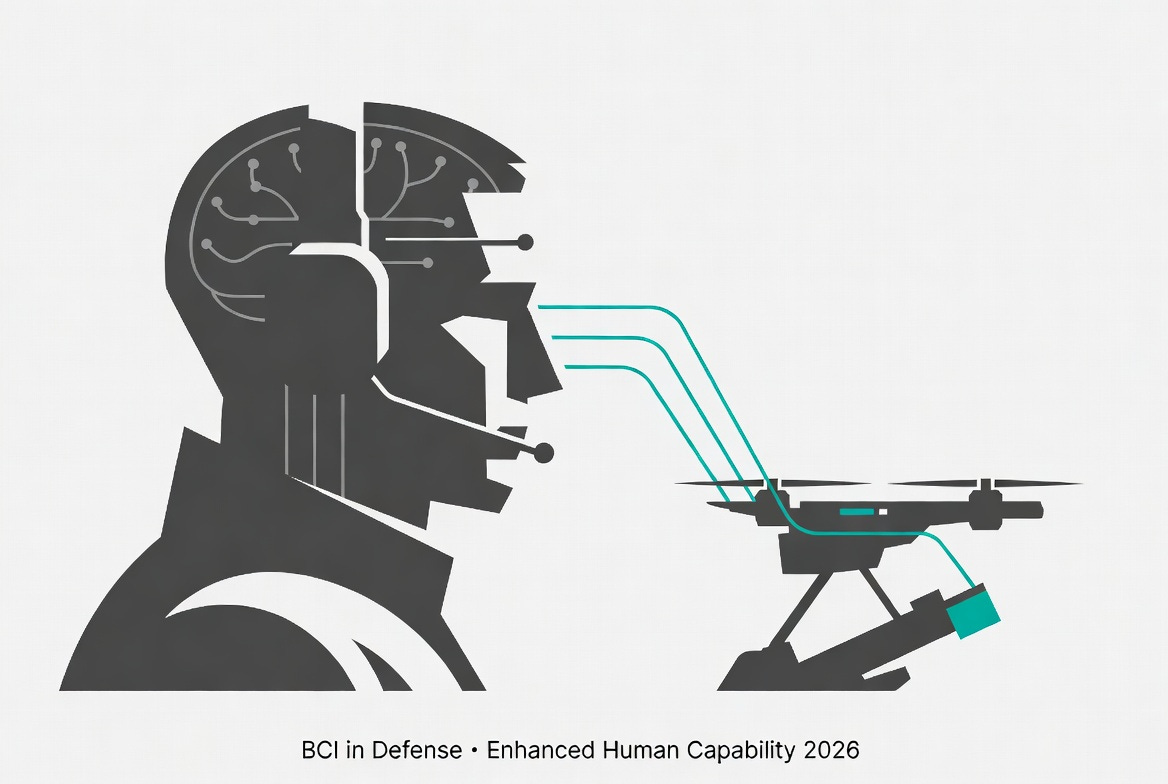
The Strategic Human-Machine Convergence

In an era of labor shortages, aging populations, and intensifying strategic competition, the ability to restore, enhance, and ultimately augment human cognitive and motor capability is rapidly becoming both a medical necessity and a national advantage.
At Macro Notes, after conducting an in-depth review of the latest clinical trial data, FDA filings, regulatory updates, and discussions with leading neuroscientists and investors in the field, we have found that Brain-Computer Interface (BCI) technology is advancing at a pace that most market participants have yet to fully appreciate.
This is no longer a distant or speculative development. Multiple companies now have human patients actively using thought alone to control digital devices, communicate, and restore meaningful functions — with several programs reaching critical milestones in 2026.
A Clear Explanation for Those New to the Topic
A Brain-Computer Interface (BCI) is a system that reads electrical signals from the brain and translates them into commands for external devices — or, in more advanced versions, sends targeted signals back into the brain.
There are three main approaches today:
Non-invasive (wearable EEG headsets)
Minimally invasive (stents placed in blood vessels near the brain, such as Synchron’s Stentrode)
Fully invasive (high-density electrode arrays implanted directly on or in the brain, such as Neuralink’s N1 or Blackrock Neurotech’s arrays)
The most significant progress in 2026 is occurring in the invasive and partially invasive categories, where bandwidth and precision now allow paralyzed patients to move cursors, type messages, control robotic arms, and pursue applications such as speech restoration and vision recovery.
The shift from “promising preclinical results” to “real-world human use with measurable functional gains” is the development that deserves closer attention from investors.
The Momentum and the Numbers Worth Paying Attention To
The global brain-computer interface market is currently valued at approximately $2.7–3.25 billion in 2026 and is projected to reach between $7 billion and $12 billion by the early-to-mid 2030s, with compound annual growth rates of 14% to 17.5% (the implantable segment is growing particularly fast).
Beyond the headline figures, the clinical picture in mid-2026 is concrete:
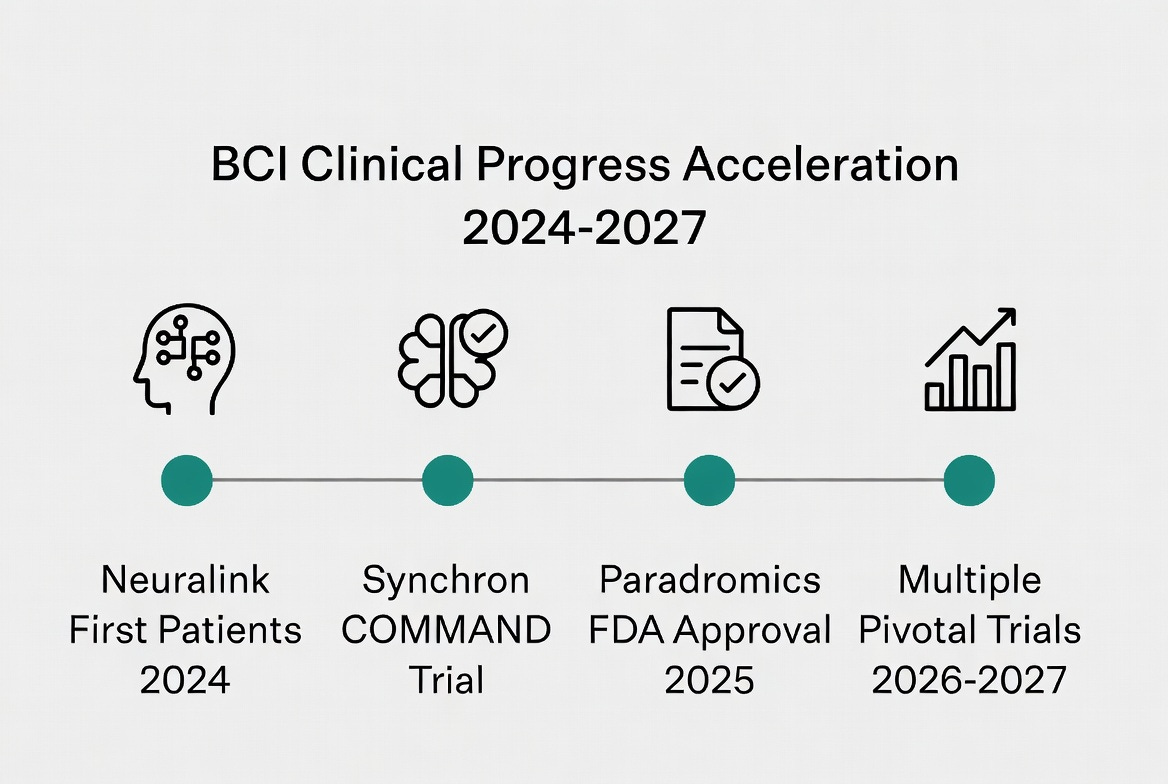
Neuralink has multiple human patients and continues to expand its trials, including programs focused on speech and vision restoration.
Synchron’s Stentrode has demonstrated sustained safety and usability, with patients performing daily digital tasks.
Paradromics has received FDA approval to initiate a clinical trial specifically targeting speech restoration with its high-bandwidth Connexus system.
Precision Neuroscience and Blackrock Neurotech are scaling electrode technology and accumulating long-term human data.
Defense, Big Tech, and established medtech players are also increasing their engagement, recognizing both the therapeutic potential and the longer-term strategic implications.
The core investment thesis is that BCI represents the foundational interface layer between human intention and machines. The first wave of applications — restoring movement, communication, and sensory function for patients with severe neurological conditions — is already demonstrating technical feasibility and opening regulatory pathways. As safety, bandwidth, and device longevity continue to improve, the addressable market expands well beyond restorative medicine into high-performance, defense, and potentially cognitive augmentation domains.
This free section provides the context, verified 2026 developments, and the strategic rationale for paying attention to this theme now.
For paid MacroNotes subscribers (full analysis unlocked immediately below):
We deliver the deeper investor analysis:
Head-to-head comparison of the leading BCI platforms and their technological moats (Neuralink, Synchron, Paradromics, Precision Neuroscience, Blackrock Neurotech, and others)
Current valuation context, public-market proxies, and realistic exposure routes
Portfolio construction framework, including allocation sizing, timing considerations, and risk management
Detailed catalyst calendar through 2027–2028
Comprehensive risk assessment covering technical, regulatory, ethical, and competitive dimensions, with mitigation perspectives
Downloadable tracker covering key clinical programs, patient data, and companies to monitor
The ability to interface directly with the human brain is transitioning from experimental to strategically relevant. The companies and technologies positioned to lead this shift are becoming visible — and the market has not yet fully priced the implications.
Macro Notes Premium - Brain–Computer Interfaces
The free section established the “why now.” This premium section is the “how to play it” — platform-by-platform competitive analysis, valuation and exposure routes, a portfolio construction framework, a dated catalyst calendar through 2028, a full risk assessment, and a tracker you can monitor going forward. All figures verified against company filings, FDA announcements, and funding disclosures as of mid-June 2026. Where sources disagree, we show the range…